Diavol Strâin – Dunkelheit mit Haltung
Diavol Strâin aus Chile sind für mich genau die Art von Band, bei der Darkwave nicht einfach nur nach Vergangenheit klingt. Hier treffen düstere Post-Punk-Strukturen auf Coldwave, Minimal Wave und eine ordentliche Portion Punk-Energie. Das Ergebnis ist kalt, roh, hypnotisch und gleichzeitig unglaublich intensiv.
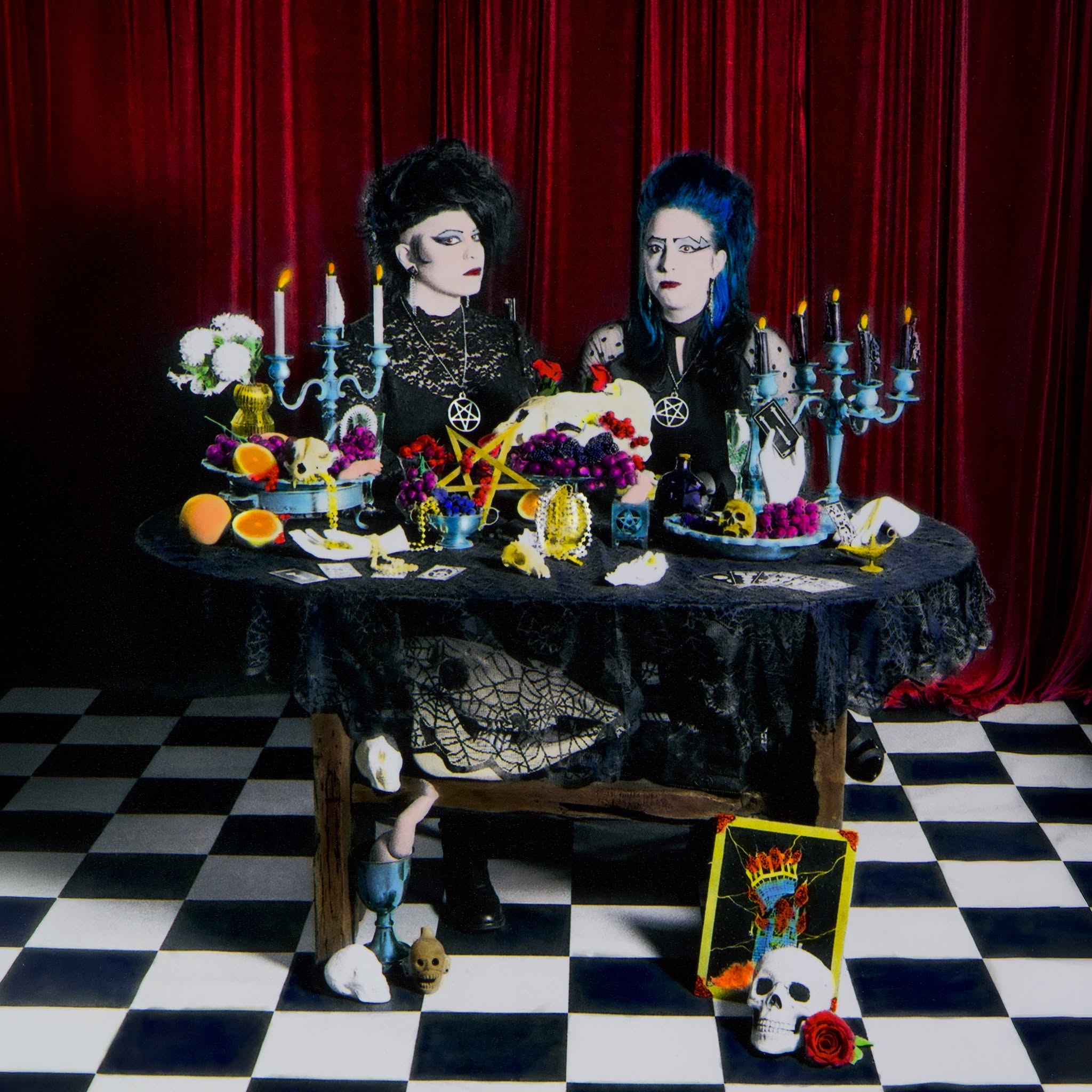
Hinter Diavol Strâin stehen Lau M und Ignacia Strâin. Mit Bass, Gitarre, Synthesizern und elektronischen Drums schaffen sie einen Sound, der erstaunlich direkt wirkt. Es braucht hier keine große Instrumentierung, um Atmosphäre aufzubauen. Im Gegenteil: Gerade die Reduktion macht die Musik so wirkungsvoll.
Was mir bei Diavol Strâin sofort auffällt, ist dieser besondere Mix aus Kälte und Wut. Die Songs können sehr minimalistisch beginnen und trotzdem von Anfang an eine gewisse Spannung aufbauen. Dann kommen die treibenden Basslinien, die düsteren Synthesizer und die Gitarren dazu – und plötzlich entwickelt sich daraus ein Sound, der ziemlich kompromisslos nach vorne geht.
Natürlich hört man die großen Namen des Genres heraus. The Cure, Siouxsie and the Banshees, Bauhaus, Depeche Mode oder auch She Past Away sind irgendwo im Hintergrund zu finden. Trotzdem habe ich bei Diavol Strâin nie das Gefühl, einfach nur eine weitere Retro-Wave-Band zu hören.
Dafür ist zu viel eigene Energie vorhanden.
Die Band nimmt klassische Elemente des Darkwave und Post-Punk und verbindet sie mit Punk, Shoegaze und elektronischen Sounds. Gerade diese Mischung macht den Unterschied. Es klingt nicht nach einer nostalgischen Reise zurück in die 1980er, sondern nach einer Band, die ihre Einflüsse kennt und daraus etwas Eigenes macht.
Bereits mit „Demonio“ wurde diese Richtung deutlich. Dunkle, reduzierte Songs, treibende Rhythmen und eine Atmosphäre, die gleichzeitig kalt und emotional wirkt. Später wurde der Sound immer intensiver und komplexer.
Mit „Todo el Caos Habita Aquí“ wurde dann ziemlich deutlich, was in Diavol Strâin steckt. Schon der Titel – All the Chaos Lives Here – passt eigentlich perfekt zu dieser Musik. Hier geht es nicht um glatte und perfekt produzierte Darkwave-Klänge. Es geht um Spannung, Dunkelheit und dieses Gefühl, dass unter der Oberfläche ständig etwas brodelt.
Besonders wichtig finde ich dabei den Bass. Er gibt den Songs nicht nur den Rhythmus, sondern übernimmt teilweise fast die melodische Führung. Zusammen mit den Synthesizern und Gitarren entsteht dadurch dieser hypnotische Sog, der für mich einen großen Teil des Sounds ausmacht.
„Elegía del Olvido / Elegía del Horror“ geht noch einmal deutlich tiefer. Vergessen und Horror, Verlust und Erinnerung, persönliche und gesellschaftliche Konflikte – all das findet hier seinen Platz.
Gerade dadurch bekommt die Musik eine zusätzliche Ebene. Diavol Strâin wollen nicht einfach nur düster klingen. Hinter der Musik stehen Themen wie Identität, Ausgrenzung, Widerstand, Sexualität, gesellschaftliche Normen und Selbstbestimmung.
Und genau das gefällt mir.
Die Musik darf dunkel sein, ohne sich darin zu verlieren. Sie darf aggressiv sein, ohne einfach nur laut zu werden. Und sie darf politisch und persönlich sein, ohne dass die Musik dabei zur Nebensache wird.
Auch die späteren Veröffentlichungen wie „Sacrificio“, „Traición“ und „Vipera Mortis“ zeigen diese Entwicklung. Der Sound bleibt eindeutig Diavol Strâin, wird aber immer wieder um neue Facetten erweitert.
Mit „Eterno Retorno“ wird dieser Weg weitergeführt. Für mich wirkt die Band hier noch konzentrierter. Weniger überflüssige Elemente, dafür mehr Atmosphäre, mehr Druck und wieder diese Mischung aus elektronischer Kälte und menschlicher Intensität.
Genau darin liegt für mich die Stärke von Diavol Strâin.
Sie können einen Song fast zerbrechlich wirken lassen und ihn im nächsten Moment mit einem treibenden Rhythmus komplett verändern. Die Musik bewegt sich ständig zwischen Melancholie und Aggression, Distanz und Nähe, Dunkelheit und Energie.
Auch die Verbindung zur südamerikanischen Darkwave- und Post-Punk-Szene macht die Band für mich interessant. Diavol Strâin zeigen, dass die Szene längst nicht nur in Europa oder Nordamerika stattfindet. Gerade aus Lateinamerika kommen immer wieder Bands, die klassische Gothic- und Wave-Einflüsse mit einer ganz eigenen kulturellen und gesellschaftlichen Perspektive verbinden.
Bei Diavol Strâin funktioniert das besonders gut.
Was bleibt, ist ein Sound, der sich nur schwer in eine einzige Schublade stecken lässt. Darkwave? Post-Punk? Coldwave? Riot Wave? Eigentlich von allem etwas – und gleichzeitig mehr.
Für mich sind Diavol Strâin deshalb eine Band, die man nicht einfach nebenbei hören sollte. Ihre Musik funktioniert am besten, wenn man sich darauf einlässt. Wenn der Bass einsetzt, die Gitarren anfangen zu schweben und die Synthesizer diese kalte Atmosphäre erzeugen, entsteht genau diese Art von Musik, die für mich die dunkle Seite der Szene ausmacht.
Diavol Strâin sind dunkel, eigenständig und kompromisslos. Eine Mischung aus Darkwave, Coldwave, Post-Punk und Punk-Energie – kalt und hypnotisch, aber gleichzeitig voller Wut, Emotion und Haltung. Genau so darf moderner Darkwave für mich klingen.
Bandcamp:
https://diavolstrain.bandcamp.com/
Instagram:
https://www.instagram.com/diavolstrain
YouTube:
https://www.youtube.com/@diavolstrain
Facebook:
https://www.facebook.com/diavolstrain
Soundcloud:
https://soundcloud.com/diavolstrain
Diavol Strâin – Band Profile
Diavol Strâin from Santiago, Chile, are one of those bands for me that immediately create their own atmosphere. Dark, cold, sometimes aggressive, and at the same time incredibly intense. Musically, they move between Darkwave, Post-Punk, Coldwave, Minimal Wave, and Riot Wave, bringing these influences together into a sound that definitely has its own identity.
The duo Lau M and Ignacia Strâin combine bass, guitar, synthesizers, and electronic drums to create music that can feel very stripped-down on one side, but develops an enormous amount of energy on the other. That contrast is exactly what makes Diavol Strâin so interesting to me.
Their sound clearly has its roots in classic Post-Punk and Darkwave. Influences from The Cure, Siouxsie and the Banshees, Depeche Mode, and Cocteau Twins can be found alongside elements of She Past Away, Schonwald, and Double Echo. At the same time, there is a strong dose of Punk and Shoegaze running through the music.
And that is where something of their own emerges. Diavol Strâin do not sound like a band simply trying to bring back the sound of the 1980s. They take these influences and combine them with their own energy, attitude, and a much more modern perspective.
Their early releases already made it pretty clear where they were heading. “Demonio”, released in 2016, created an early dark soundscape in which Coldwave, Minimal Wave, Post-Punk, and Punk elements came together.
In 2018, “Todo el Caos Habita Aquí” followed – and the title could hardly fit the music better. All the Chaos Lives Here describes this mixture of darkness, unrest, and energy running through the songs remarkably well.
What I find particularly interesting is the bass work. The bass in Diavol Strâin is not simply there as accompaniment. It becomes an important part of the melodies. Together with the guitars, synthesizers, and electronic drums, it creates a sound that can be both driving and hypnotic.
Then came “Elegía del Olvido / Elegía del Horror” in 2021. For me, this is one of the band's most important releases. Even the division between Forgetfulness and Horror makes it clear that there is more going on here than atmosphere alone.
The music also deals with loss, memory, violence, and social conflict. In particular, the social and political events in Chile from 2019 onward left their mark on the band's work. This gives the music another layer that goes beyond traditional Darkwave.
Musically, the band sounds even more intense here. Electronic drums, synthesizers, guitars, and vocals increasingly blend together, while that raw quality remains intact. For me, that rawness is a big part of what makes Diavol Strâin so appealing.
The releases “Sacrificio,” “Traición,” and “Vipera Mortis” continued this development. “Vipera Mortis” in particular brings out the band's darker and at times almost threatening side once again.
In 2026, “Eterno Retorno” added another chapter. For me, the album sounds like a natural progression of everything that came before. The familiar ingredients are still there – bass, guitar, synthesizers, and electronic rhythms – but everything feels more focused and intense.
Tracks such as “La Última Inocencia,” “Terminal del Silencio,” “Solve Et Coagula,” and “Tensión y Deseo” reveal different sides of the band. At times they move more towards Darkwave and Coldwave, while other moments lean towards Post-Punk or experimental electronics.
What I particularly like about Diavol Strâin is that there is a clear attitude behind the music. It is not simply about sounding dark or mysterious. Themes such as identity, resistance, social norms, exclusion, sexuality, anger, and self-determination play an important role.
Feminist and queer perspectives are also part of the band's identity. For me, this is an important element of both their music and their presence within the scene. The band uses its position not only for aesthetics, but also to make subjects visible that are often pushed to the margins.
At the same time, the music always remains at the center. And for me, that works perfectly. The lyrics and the attitude add another layer to the sound without overshadowing the music itself.
I can also imagine Diavol Strâin being incredibly intense live. The combination of electronic rhythms, bass, guitars, and their dark aesthetic can create a very hypnotic atmosphere, while the energy of Punk remains clearly present.
For me, Diavol Strâin are therefore much more than just another Darkwave act from South America. They combine classic Post-Punk and Gothic influences with Coldwave, electronic coldness, Punk energy, and a very personal attitude.
That combination is exactly what makes the band so exciting to me. The music can be melancholic and dark, but at the same time full of anger and movement. It can sound minimalist and still become incredibly intense.
Diavol Strâin stand for a dark and uncompromising sound from Chile – somewhere between Darkwave, Coldwave, Post-Punk, Minimal Wave, and Riot Wave. Cold, hypnotic, raw, and full of energy. A band that does not simply create a dark atmosphere, but also puts attitude, identity, and resistance into its music.